Before We Decide
Reflections After Touring the Johnson County Jail

One of the things I’ve been trying to do more over the last several months is refuse to have strong opinions about things I haven’t personally experienced. Too often, we allow headlines, social media, political campaigns, and other people’s perspectives to shape our convictions before we’ve taken the time to see something for ourselves.
So when I was invited to tour the Johnson County Jail last week, I immediately said yes.
I didn’t go looking for my opinion to change. I went because I believe our community deserves leaders who are willing to see things for themselves before speaking about them.
I walked in believing I already knew what I thought. I walked out realizing the conversation was far more complicated than I had allowed myself to believe.
Like many people in our community, I have been following the conversation surrounding the proposed $96 million jail. Before stepping inside, I thought I already knew where I stood. As a Black man, I’ve always wrestled with conversations about jails and prisons because I know who is disproportionately represented inside them. For generations, Black communities have experienced the criminal justice system differently. We have watched racial disparities persist in arrests, incarceration, sentencing, and access to opportunities that often determine whether someone enters the system in the first place. Because of that history, it’s difficult for me to separate a conversation about building a jail from a conversation about the systems that continue leading so many Black and Brown people there.
That reality should make every one of us uncomfortable because it forces us to wrestle with questions that are much bigger than a building. Why do so many people continue entering our criminal justice system? Why do racial disparities continue to exist? Why are we still struggling to address education, poverty, addiction, mental health, family instability, and economic opportunity in ways that truly interrupt the cycle before someone ever reaches a jail cell?
I walked into the facility believing those were the questions that mattered most.
Everything changed the moment the doors locked behind me.
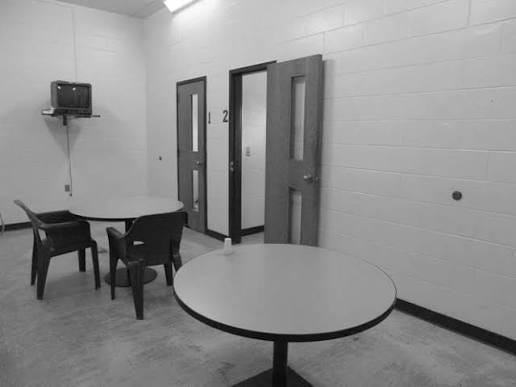
As I made my way through the housing units, looked into the cells, and listened to what daily life actually looks like inside those walls, I stopped thinking about politics and budgets. Instead, I found myself looking into the eyes of the men and women who were looking back at me.
Most people who enter the Johnson County Jail will be released within seventy-two hours. Others, however, remain there for weeks or even months while waiting for bond or waiting for their day in court. As I stood there thinking about that reality, one thought refused to leave me.
Regardless of why they were there, before they were inmates, they were people. Someone’s son. Someone’s daughter. Someone’s father. Someone’s mother.
Standing there, it became impossible for me to forget that.
I’ll be honest. I wasn’t prepared for what I saw. The conditions are difficult to describe. Old. Cramped. Outdated. But even those words don’t fully capture what it feels like to walk through a space where human beings spend weeks and sometimes months of their lives. I found myself wondering what happens to a person’s spirit after living in that environment day after day. What happens when isolation becomes routine? What happens when hope slowly gives way to hopelessness? What happens when someone eventually walks back into our community carrying more brokenness than they had when they arrived?
The longer I was there, the more I realized this isn’t just a conversation about the conditions of a jail. It’s a conversation about the condition of people.
Because whether we acknowledge it or not, how we treat people while they’re there often shapes who they become when they return.
That is the part of this conversation I don’t hear enough people talking about. The overwhelming majority of people inside that jail are coming back home. They’ll return to our neighborhoods, our workplaces, our churches, our schools, and our families.
The question isn’t whether they’ll come back.
The question is who they’ll become before they do.
That was the moment I realized I had been asking an incomplete question.
I didn’t walk away believing less in prevention. If anything, we need prevention programming now more than ever. We absolutely should continue investing in education, youth development, affordable housing, mental health services, addiction treatment, workforce development, and stronger families. We should continue asking why Black and Brown people remain disproportionately represented within our criminal justice system. Those conversations are not optional. They are essential if we truly want fewer people entering jails in the first place.
But I also walked away believing something I hadn’t fully appreciated before.
Justice should never require us to surrender someone’s humanity.
A person’s worst decision should never determine whether they are treated as though they no longer have value. Accountability matters. Victims matter. Public safety matters. But dignity matters too. Those values do not compete with one another. They belong together.
One of the things that troubles me most about this debate is how quickly we’ve reduced it to another political argument. Some people only want to talk about the building. Others only want to talk about the system. The truth is, I don’t think we can honestly talk about one without confronting the other. The older I get, the more I’m learning that life rarely gives us the luxury of choosing one truth over another. Sometimes leadership requires us to hold two difficult truths at the same time.
As I reflected on the visit, I also found myself wondering if part of the reason this conversation has become so difficult is because many of us are debating something we’ve never actually seen. Johnson County voters have rejected this bond multiple times, and I don’t dismiss that. I think it reflects a community wrestling with important questions about priorities, prevention, and public investment. Those are conversations worth having.
But after walking through the jail this week, I also believe those conversations should be informed by what currently exists behind those walls. It’s one thing to have an opinion from the outside. It’s another thing to stand inside the facility and wrestle with what human beings experience while they’re there.
Whether someone ultimately supports building a new jail or opposes it isn’t really my point. My hope is simply that before we make a decision, we’re willing to look honestly at what exists today. Meaningful decisions are rarely made from assumptions. They’re made when we’re willing to see reality for ourselves and wrestle honestly with what we’ve seen.
I can oppose the systems that continue producing racial disparities while also believing people deserve humane conditions once they are incarcerated. I can advocate for prevention while acknowledging that the current facility no longer reflects the dignity every human being deserves. I can believe in accountability without believing incarceration should strip someone of their humanity.
They complete one another.
As I drove away from the jail, I found myself sitting in silence longer than I expected. I wasn’t thinking about politics anymore. I wasn’t thinking about the price tag or the public debate. I kept seeing the faces of the men and women who looked me in the eyes as I walked past. I kept wondering who they were before they ended up there, and I kept wondering who they could become when they leave.
If someone leaves that jail six months from now, have we created an environment that increases the likelihood they’ll succeed? Or have we simply asked them to survive while they were there?
Because survival and transformation are not the same thing.
Broken systems rarely produce healed people.
Perhaps we’ve been asking the wrong question all along.
Instead of asking only what kind of jail we should build, perhaps we should also be asking what kind of people we hope return to our neighborhoods when they leave it.
Walking through those doors gave me more questions than answers.
But maybe that’s exactly where meaningful conversations begin.
Justice without humanity will never produce healing. Compassion without addressing broken systems will never produce lasting change.
The men and women I looked in the eyes this week aren’t staying there forever.
They’re coming back home.
And maybe that’s the truth our community needs to sit with.
Not whether they’re coming back.
They will.
The question is whether we’ve done everything we can—as a community—to ensure they come home with more hope than hopelessness, more dignity than despair, and more opportunity than the one that led them there in the first place.
After walking through those doors on Wednesday, I’m convinced we owe ourselves a more honest conversation than the one we’ve been having.
And I think that’s where real leadership begins.
Until next time, let’s keep building with purpose and leading with care.
Frederick Newell
Thank you for your post. Especially: "The older I get, the more I’m learning that life rarely gives us the luxury of choosing one truth over another. Sometimes leadership requires us to hold two difficult truths at the same time."
Your posts always sit with me for days giving me such food for thought. This is no exception. Thank you so much for being here and making me think harder, deeper, and with more compassion.